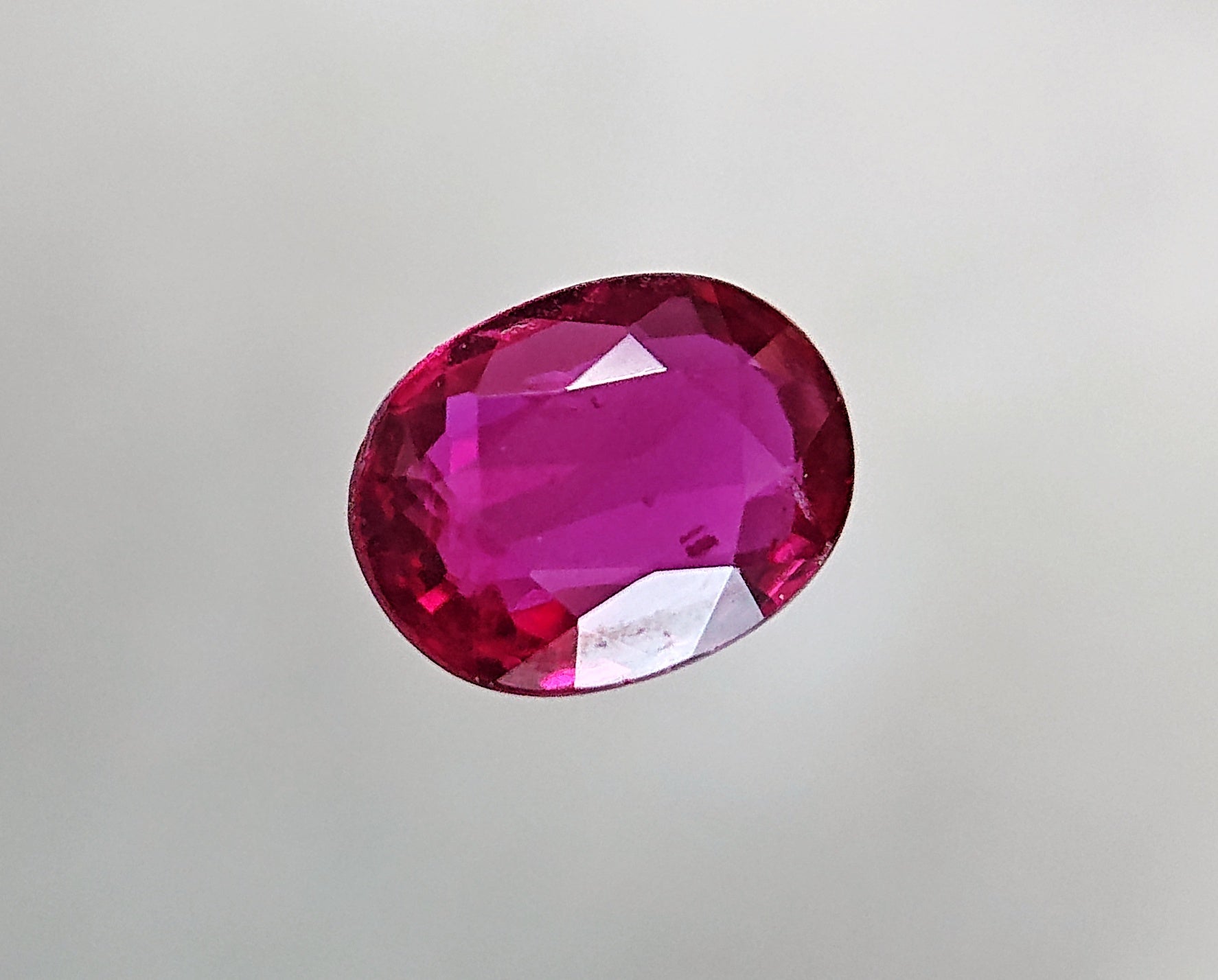
Ruby is red corundum
Ruby and sapphire are both corundum, composed principally of aluminium oxide. Predominantly red corundum is called ruby; other colours are sapphire. A Mohs hardness of 9 offers good scratch resistance, though fractures and inclusions vary from stone to stone.
Chromium absorbs light to produce red
Pure corundum is colourless. When chromium replaces some aluminium, the crystal can appear red. Chromium also contributes to red fluorescence; iron content and the crystal environment influence brightness and secondary purple or orange hues.
- Geological background
Gem-quality corundum can form in varied environments, including marble and iron-rich rocks.
- Chromium
Trace chromium absorbs portions of visible light, contributing red colour and fluorescence.
- Individual character
Differences in iron, inclusions, colour zoning and cut together shape a ruby’s red.
Understanding major sources through geology and individual characteristics
Ruby sources can be broadly understood as low-iron marble-associated deposits and deposits related to more iron-rich rocks. Origin opinions rely on inclusions, trace elements and spectra; characteristics from different sources may overlap.
Myanmar
Myanmar / Mogok
- Geological setting
- Valleys in marble belts and historic secondary deposits
- Typical characteristics
- Known for fine stones with low iron, chromium-related colour and bright fluorescence.
- Rarity
- Stones combining historic origin, limited supply and fine colour command particular recognition.
Myanmar
Myanmar / Mong Hsu
- Geological setting
- Mountainous marble-associated deposits
- Typical characteristics
- Some material has purple or blue zones; heating may improve its appearance.
- Rarity
- Although both are in Myanmar, Mong Hsu and Mogok have distinct deposits and stone characteristics.
Mozambique
Mozambique
- Geological setting
- An important modern mining area within East Africa’s metamorphic belt
- Typical characteristics
- Colours range from vivid red to deep red; fine larger stones are also produced.
- Rarity
- Quality varies within every important source. Colour, transparency and treatment should be assessed separately.
Sri Lanka
Sri Lanka
- Geological setting
- River gravel deposits
- Typical characteristics
- Some stones have brighter or pinker reds, with examples of good transparency.
- Rarity
- Fine larger stones with sufficient red to be classified as ruby remain limited.
Thailand and Cambodia
Thailand and Cambodia
- Geological setting
- Deposits associated with basaltic volcanic activity
- Typical characteristics
- Iron commonly contributes deeper, darker reds. These sources also have a long history of heat treatment.
- Rarity
- Fine individual stones that remain bright deserve assessment independently of general origin trends.
Vietnam and Central Asia
Vietnam and Central Asia
- Geological setting
- Mountainous, marble-associated deposits
- Typical characteristics
- Produce vivid red to pink stones, with some characteristics overlapping those from Myanmar.
- Rarity
- Limitations in output, size and transparency make reliable origin identification particularly useful.
Pigeon blood: a description of colour
Pigeon blood usually describes an intense, vivid red, but is not a single worldwide grade. Laboratory criteria and applicable conditions differ. Consider primary and secondary hues, tone, saturation, fluorescence, transparency and light return alongside the designation.
Distinguish heating from filling treatments
Heating is widely used to improve the appearance of colour and clarity. Other processes include flux-assisted heating and lead-glass fracture filling, with differing implications. Beyond Heated or Unheated, check for residues, the degree of filling and care requirements.
Unheated status is one factor, not a conclusion
Unheated means no indications of heating were found; it does not guarantee colour, transparency or cut. Rarity increases when beautiful red, brightness, transparency and substantial size occur naturally together.
Consider the actual jewel and its report together
In daylight and warm light, assess whether the red becomes too dark, the extent of purple or orange modifiers, and the effect of zoning and inclusions on appearance and durability. Valuable stones require multiple sources of information on natural origin, treatment and geographic origin.