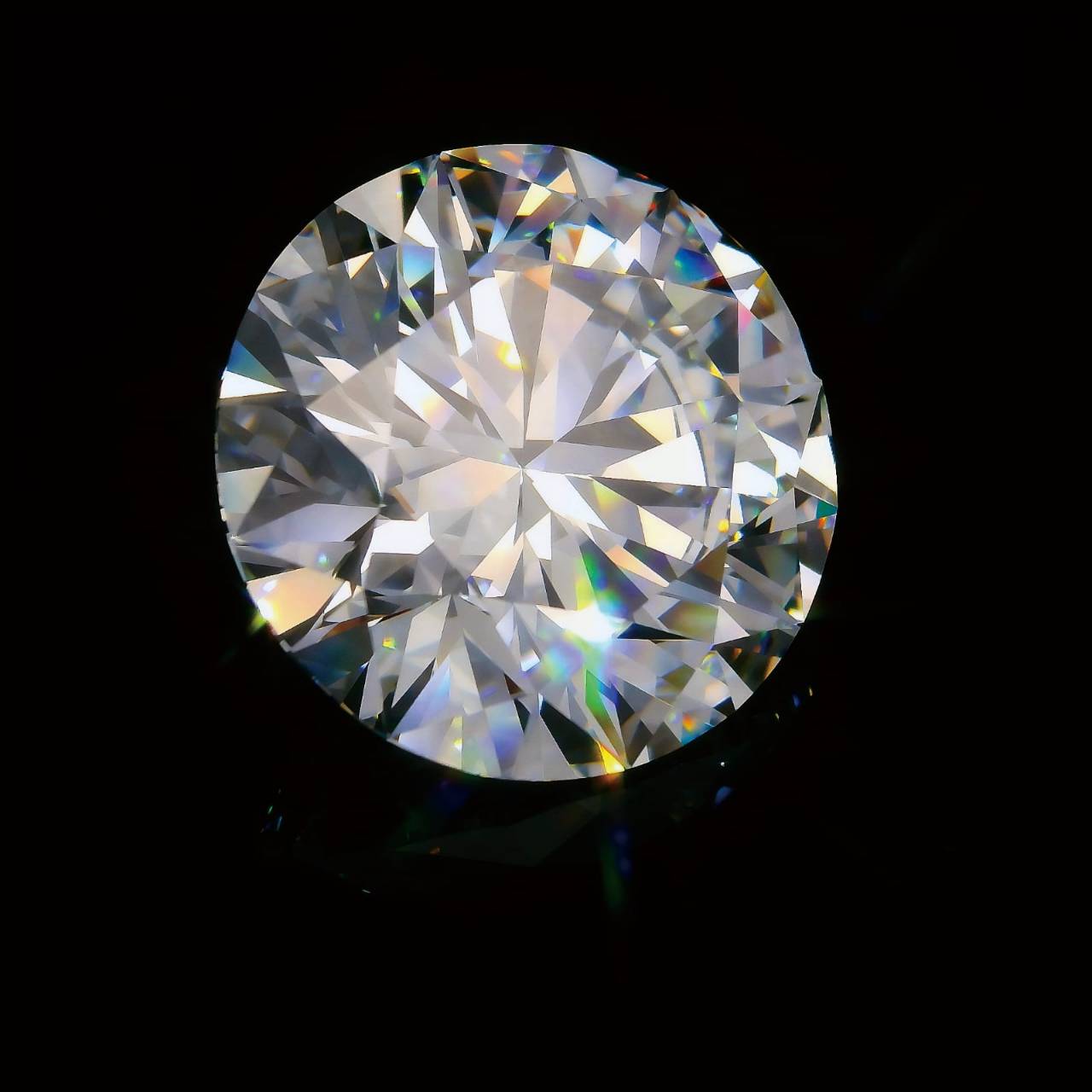
How diamonds form and are cut
Diamond is a crystal of tightly bonded carbon atoms. Most natural diamonds formed in the mantle at depths of approximately 150 kilometres or more, before volcanic activity carried them towards the surface. After mining, cutters consider the shape, internal characteristics and crystal orientation of the rough, balancing weight retention with attractive light return. Cutting and polishing turn a long geological history into brilliance.
- 01 · Formed beneath the earth
High temperatures and pressures deep within the earth allow carbon to crystallise as diamond.
- 02 · Carried towards the surface
Volcanic magma rapidly transports the crystals to near-surface locations.
- 03 · Rough crystal
Rough diamonds are recovered from host rock or river deposits, then studied for their internal features and form.
- 04 · Revealing brilliance
Cutting and polishing realise a design that returns light towards the face of the stone.
The 4Cs: four perspectives on a diamond
The 4Cs are Carat Weight, Colour, Clarity and Cut. Each describes a different aspect of a diamond’s quality. Consider them together with the actual stone’s appearance and your preferences.
- CARAT · Weight
One carat equals 0.2 grams. Even at the same weight, shape and depth affect face-up size.
- COLOUR · Colour grade
From D to Z, increasing amounts of yellow or brown become apparent.
- CLARITY · Inclusions and blemishes
Using 10× magnification, graders assess the location, number and visibility of inclusions and blemishes.
- CUT · Brilliance
Angles, proportions, polish and symmetry influence light return and sparkle as a diamond moves.
Observing colour and clarity
Small colour differences and clarity names can be difficult to understand in words alone. D–Z comprises 23 colour grades from colourless to light yellow or brown; FL–I3 comprises 11 clarity grades. The diagram is illustrative only. Actual grading requires controlled lighting and professional observation, with clarity assessed under 10× magnification.
Colour · D–Z
From colourless to increasing light colour
From D to Z, increasing amounts of yellow or brown become apparent.D–FNear Colourless
G–JFaint
K–MVery Light
N–RLight
S–Z
Clarity · FL–I3
Consider visibility, not simply the presence of inclusions
Location, size, number and contrast can create different impressions even within the same grade.The diagram illustrates differences between grades. It cannot be used to grade the colour or clarity of an actual diamond.
What to consider beyond the 4Cs
Type IIa is a chemical classification with almost no detectable nitrogen, rather than a quality grade. Fluorescence describes the response to ultraviolet light, while shape affects outline and brilliance. Natural and laboratory-grown diamonds are both carbon crystals, but grow in different environments. Treatments also include HPHT, irradiation and laser drilling. Understanding each term matters more than listing them.
View the diamond alongside its report
Check the report number, weight, measurements, 4Cs, inclusion plot, comments and girdle inscription, then view the actual diamond in diffused daylight, indoor light and shade. Under consistent conditions, compare face-up size, colour, inclusions, contrast and sparkle in motion. The report is a guide; the diamond itself is the jewel you will cherish.